
A BIG PROBLEM: TODAY'S REPORTING LACKS STANDARDISATION
Readers of today's D3-related literature – be it in academic, professional, industry, or media settings – face a perplexing lack of standardisation, particularly regards terminology. Such "chaos" is damaging at multiple levels, and ultimately erodes the social impact of D3 science. As follows, D3G's translational approach offers the field a golden opportunity to rectify this damage. We now seek to guide the publishing ecosystem – comprising writers, reviewers, editors, publishers, bibliographic services, and critical readers – towards a collective effort at standardised reporting (i.e. based on controlled vocabulary), all in the name of "stronger science, better practice and social good".Evolving from "MIH" to "D3" terminology
The D3 family (now spanning 56 countries) has made great progress with establishing a scientifically robust, translational paradigm to holistically manage the long-recognised clinical scenario first named as molar-incisor hypomineralisation ("MIH") in 2001. That naming inspired broader recognition (primarily from European paediatric dentists) and launched the "MIH era", bringing much-needed attention to this neglected topic. Our later reconceptualisation of "Molar Hypomin" (MH) in the "D3 era" (from 2010) embraces a new definition, classification, lifecourse approach and MEDLINE search term that integrate seamlessly within the translational context of "chalky teeth" – the MH Lifecourse concept.These recent advances bring new needs, plus the means, to achieve terminological standardisation around "Molar Hypomin" (MH) and chalky teeth.
OUR GOAL: UNIVERSAL STANDARDS FOR D3 REPORTING

Just as the DDE era addressed prior lack of scientifically-framed standardisation for clinical phenotyping, D3G's standardisation efforts in the D3 era aim to attack additional gaps including translation-friendly, clinico-scientific reporting of Molar Hypomin/MH/chalky molars.
Our hopeful aim is to replicate the success of Grace Suckling's DDE Index, which remains the universal standard for enamel defect reporting as sanctioned by the World Health Organisation. To do so, we need to identify and blend key scientific and clinical elements as she did, and then add our aspirations for translating these advances through to social good.

Sitting between DDEs and D3s, the MIH era spawned an impressive increase in the amount of material reported, both academically and in the public domain. Unfortunately however, standardised reporting fell by the wayside, inspiring D3G's translational rectification as elaborated below. For lovers of chaos theory, we're pleased to report that we actually were able to find some M–I–H order amongst the apparent chaos of MIH terminology, as illustrated on the right – it doesn't hurt to have a laugh at ourselves now and then, does it! See the 'MIH Alphabet Soup' section here for more information about this intriguing collection of clinical terms.
TRANSLATIONAL STEPS TOWARDS CROSS-SECTOR CONSENSUS
Before introducing our Reporting Guidelines, we think it's important to understand how D3G's new translational paradigm – and allied terminology – came about, with scientifically stronger reporting (i.e. writing, reviewing, publishing) one of its aims.
Toronto D3 symposia and workshops, 2020-22

At D3G's inaugural International D3 Workshop in 2020, cross-sector recognition of the urgent need for standardisation – particularly across communication (terminology & language), research (classification & definition of Molar Hypomin) and clinical practice (research-friendly clinical standards & guidelines) – was the "numero uno" outcome. This in turn inspired our mission-focussed tagline – 'Stronger Science, Better Practice, Social Good' – as a fresh take on the translational science mantra, "from science to social good". Secondly, this world-first translational workshop heralded a cross-sector effort to fix what came to be known as the "MIH alphabet soup problem" via a green paper strategy. This development extended across 3 subsequent Toronto events as follows.
D3G's Green Paper on 'Fixing Our Alphabet Soup Problem'

As illustrated here, the MIH era became a period of terminological chaos, with over 25 published variants relating to the pioneering term abbreviated as "MIH" (molar-incisor hypomineralisation). Well-meaningly, we dubbed the resultant bevy of acronyms as "MIH alphabet soup". For writers and readers of a scientific bent, and for general readers too, such terminological laxity was troubling if not borderline unacceptable. Consequently, in preparation for the 2021 D3 Research Incubator (video highlights), we drafted a Green Paper outlining translational characterisation of MH (covering classification, audience-specific definitions, terminology, grading, and clinical recording), and then progressively refined it across follow-on translational events in 2022 (Pre-symposium Task Force, Toronto D3 Symposium) and 2024 (D3 Day at IADR). Altogether, about 280 participants from across the sector and around the world were exposed to the document, in which over 50 people are acknowledged for their contributions – including DDE wonder woman Grace Suckling, and three pioneers of the MIH era (Birgitta Jalevik, Anna Maria Vierrou, Marlies Elfrink).
Read more about D3G's seminal MH Green Paper here.
Building consensus across the sector

After the 2022 Toronto symposium, learning outcomes from D3G's Green Paper exercise were incorporated into our websites, "Toronto D3 framework events" (NZAO+D3G mini-symposium, 2023, D3 Day at IADR-New Orleans, 2024, D3 Satellite at Enamel 11, 2025), conference presentations (COD-ABPD 2024, IAPD-2025, WOCON-2025) and academic publications. Such widespread exposure across key stakeholder groups has provided strong support for the scientifically-driven pathway we're following, plus a continual stream of ideas for for further refinement to meet end-user needs. Of course, more bridge-building remains to be done, particularly with some elements of the clinical community who remain happy with things the way they were! Fortunately, by publishing much of our "new paradigm" material online (this website primarily), ongoing updates are easy and prompt (unlike the traditional approach via academic publication). Comments and enquiries are welcomed (contact us).
HOW TO CONVERT FROM "MIH" TO "D3" TERMINOLOGY?
With D3G's translational paradigm now being widely adopted – across academia, professional organisations, industry and beyond – comes need to help the publishing ecosystem switch from "MIH" to "D3" terminology. At first glance this may seem a daunting proposition given the chaotic state of MIH terminology and disconnections between many publishers. However, referencing D3G's Green Paper (above) and following discussions with journal editors and other stakeholders at D3G gatherings in 2024 & 2025 (IADR-New Orleans, Enamel 11 Paris, IAPD-Cape Town), a path forward was identified. As follows, a start has now been made on a collection of infographics aimed at simplifying the conversion process, using our popular D3 Click & Learn format. We welcome any feedback from all users, regardless of status or whereabouts (contact us).

GETTING TECHNICAL SUPPORT FROM D3G
Under construction, but in brief:
- For individuals
- One perk of D3G membership is access to D3G's helpline for members (e.g. students, researchers, practitioners etc) seeking technical advice relating to D3s.
- We hope to soon introduce a service offering pre-submission review of member's manuscripts, as outlined below for Publishers
- Please contact us if interested, and/or if D3G membership fees are beyond your current means.
- For publishers
- Through D3G's uniquely broad reach across academia and beyond, we can access qualified peer reviewers/commentators more effectively than most academic journals, drawing on experts within our ranks, or colleagues further afield via our extensive network (career scientists, practitioners, industry, government).
- Allied with our Learning Loop initiative, we're hoping to implement a translational peer review service available to D3G partners (this is currently being trialled in house, via pre-submission review of D3G manuscripts).
- To get things rolling, the D3G secretariat will gladly help journals source strong reviewers (contact us), hoping they may reciprocally help with ongoing development of our Writer/Reviewer resources as above.
- For other organisations
- As offered to Publishers, we will gladly provide guidance on Writer/Reviewing tasks and other matters relating to quality standards.
D3 ARCHIVE: FRONTIERS RESEARCH TOPIC (ON HOLD)

To broadcast academic outcomes from our Toronto D3 Symposia (2020 Workshop, 2021 Research Incubator, 2022 Toronto Symposium) and beyond, D3G has partnered with Frontiers – an innovative and translation-savvy publisher with broad reach across basic and health sciences – to develop an Article Collection (aka Research Topic) entitled "Molar Hypomineralisation and Chalky Teeth: From developmental physiology to social good". Remarkably, this new field-shaping initiative involves 4 leading journals (Frontiers in: Physiology; Dental Medicine; Public Health; Paediatrics), and so enabling exposure across an exceptionally broad audience in best translational fashion – learn more here, and download the Writer's Guidelines here. Note other relevant articles may be included when they support our translational mission and these guidelines.
Update: this project is on hold due to bandwidth limitations, and is anticipated to reappear in some form or other shortly (contact us).
D3 ARCHIVE: 2020 PRIMER ON TRANSLATIONAL LANGUAGE

One groundbreaking element of our 2020 D3 Workshop was the first mass try-out for D3G's "chalky teeth lingo" across a broad range of stakeholders around the (English-speaking) world. This translational communication device was introduced to participants in the "D3 Discussion Framework document" used to shape the Workshop more generally (available as part of the video/CE pack here). Some excerpts from that document and the Workshop introduction follow. Note this is an ongoing "translational experiment" with an exceptionally broad audience in mind (from science-hungry kids through to rocket scientists and politicians) – feedback is welcomed! (contact us)
What do we mean by "chalky teeth", "D3s" and "decay"?
- "Chalky teeth" have (visibly) abnormal enamel due to developmental defects or early decay (see here)
- "D3s" stands for Developmental Dental Defects, the commonest of which affect enamel (see here)
- "Decay" embraces not only dental caries (acid attack from dental plaque), but also acid erosion (e.g. from acidic food and drink) and enamel breakdown (i.e. mechanical weakness or crumbliness) – all 3 aspects contribute to the health risks of chalky teeth (see here)
What do we mean by "chalky molars" & "molar hypomineralisation"?
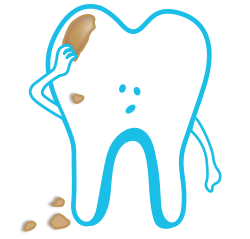
- These are back teeth (molars) with discoloured patches of defective enamel called "demarcated opacities" (see here)
- The 2-year (2nd baby/primary/deciduous), 6-year & 12-year (1st & 2nd adult/permanent) molars are affected most commonly (see here)
- The cause of demarcated opacities in molars is usually unknown ("idiopathic")
- We do use one term ("Molar Hypomin" or MH) to cover all molars and any other teeth with idiopathic demarcated opacities
- We don't use separate terms for 2-year molars ("HSPM") and 6-year molars ("MIH") for various scientific, clinical & translational reasons (see here and below)
What is "science translation" & "translational terminology"?

- "Science translation" is the 2-way process of (1) informing researchers about important problems needing their attention (e.g. population health, clinical issues, pathology & causation), then (2) converting consequent scientific progress into social good (e.g. better clinical practice, policy, products & prevention)
- "Translational terminology" enables meaningful 2-way conversations between specialists and the public, either starting with lay terms (e.g. "chalky teeth") and ending with specialised words useful to researchers (e.g. "idiopathic demarcated opacities"), or vice versa
- D3G has developed such a "translational lingo" for Molar
Hypomin, as explained for the public here, and as used by the diverse range of participants at our Toronto International D3 Symposia (here) and in D3G publications & media (here).
Distinguishing kids with Molar Hypomin from teeth with hypomineralisation

- It's important to realise that Molar Hypomineralisation (MH) is a case descriptor (referring to a person with hypomineralised teeth) – and not a tooth descriptor. When you think about the latter, "MH molars" (or "MH teeth") doesn't make sense because MH cases typically have one or more molars that are unaffected (normal). The same goes for "MH enamel", realising hypomineralised molars usually have some areas of normal enamel.
- The above issue is easily avoided by using "hypomineralised" (or "hypomin") when talking at tooth level. The abbreviation HM has long been used as counterpart to HP (standing for hypoplasia, a distinct type of enamel D3 – see here, here, here and here).
- When it comes to specifying individual teeth, the HM abbreviation can be linked with the Palmer and FDI/WHO/ISO notations for baby and adult teeth, respectively (pictured above). Hence, hypomin 2-year molars become HM-Es, and 6-year molars are denoted as HM-6s. It follows that a case involving 2-year and 6-year molars is denoted HM-Es+6s. This approach avoids the scientifically unsound situation associated with MIH and HSPM terminology – that is, there's no evidence to back the implication that MIH and HSPM are separate conditions (in contrast to a spectrum disorder, as connoted by the term MH). Learn more here.